
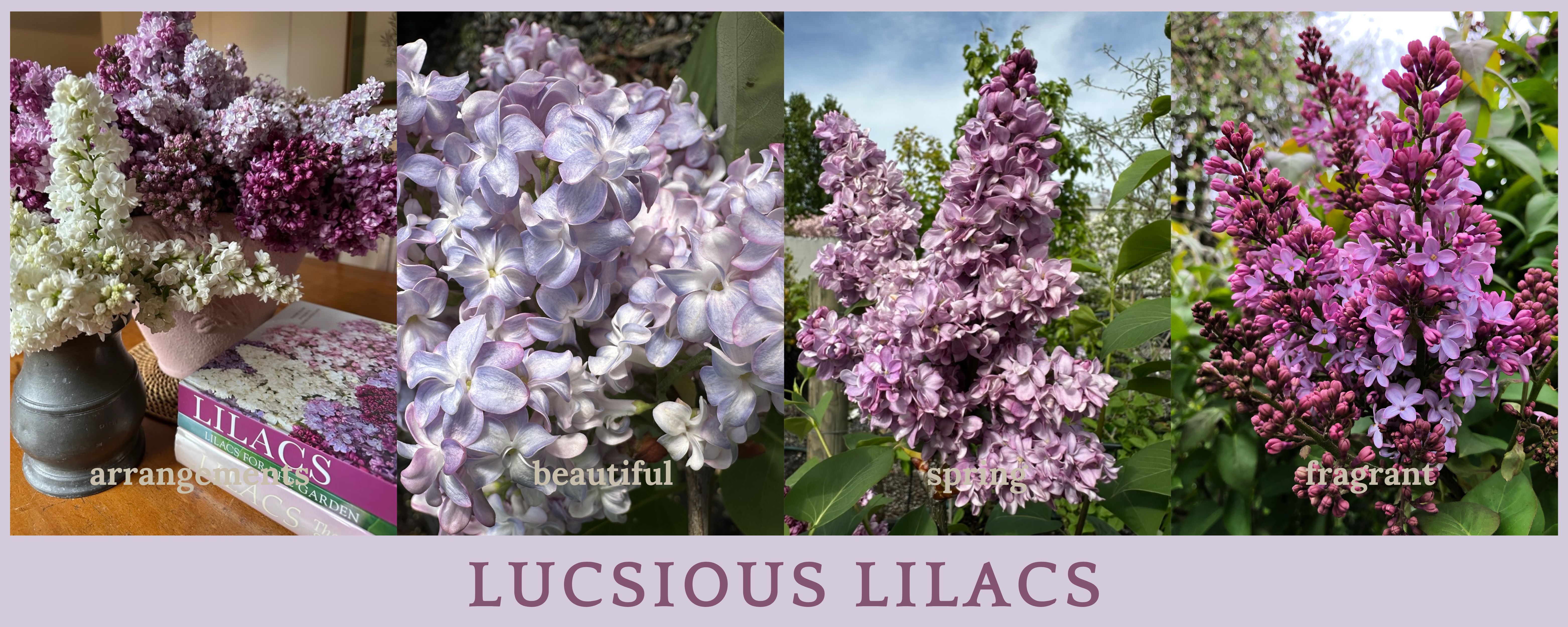
Growing lilacs in Australia
Reasons to grow lilacs
- Beautiful, highly fragrant spring flowers
- A wide choice of flower colours and forms
- Long-lived and generally easy to care for
- Excellent flowers for cutting
- Useful as feature shrubs, informal hedges or background plants
About lilacs
Lilacs belong to the genus Syringa in the olive family, Oleaceae. The genus includes deciduous shrubs and small trees native mainly to eastern Asia, with several species from south-eastern Europe. Their small, tubular flowers are carried in showy clusters, often with a strong, sweet fragrance.
Lilacs are ideal for cottage gardens, mixed borders, informal hedges and specimen planting. Compact forms can be used in smaller gardens or large pots, while taller varieties are useful towards the back of a garden bed. Their flowers can be cut for indoor arrangements.
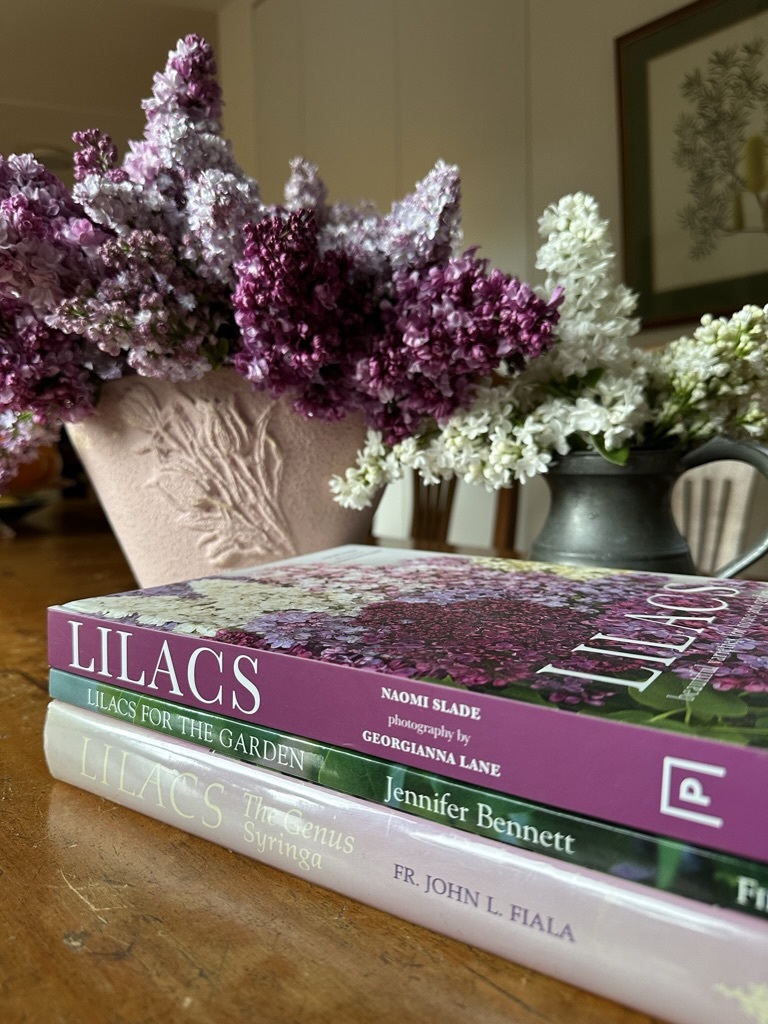
The magnificent book, Lilacs: the genus Syringa, by Father John L. Fiala is packed with interesting information. Read about Fiala, the internationally respected authority on lilacs and crabapples.
Preferred growing conditions
Lilacs perform best in:
- Full sun
- A cool or cold winter climate
- Fertile, well-drained soil
- Good air circulation
- Regular moisture while becoming established
Some varieties will tolerate light shade, but flowering is usually more abundant in full sun. Aim for at least six hours of direct sunlight each day.
Allow enough room for the plant to reach its expected mature size. Good spacing also improves airflow and can help reduce fungal problems.
Planting notes
See our care and planting instructions.
Watering
Water newly planted lilacs deeply and regularly during their first growing season, however, don't overwater when first planted. See the watering tips in the care and planting instructions. The aim is to keep the soil evenly moist without leaving it constantly wet.
Once established, many lilacs tolerate short dry periods, but they will grow and flower better if watered deeply during extended dry weather. Pay particular attention during spring growth, after flowering and through prolonged summer heat.
Deep, occasional watering is preferable to frequent light sprinkling because it encourages roots to grow further into the soil.
Feeding
Lilacs do not require heavy feeding.
Apply a layer of well-rotted compost around the root zone in late winter or early spring.
Avoid fertilisers that are very high in nitrogen. Excessive nitrogen can encourage vigorous leafy growth without a corresponding increase in flowers.
Mulching
Apply approximately 5–8 centimetres of organic mulch over the root zone. Suitable materials include:
- Composted bark
- Woodchips
- Leaf mould
- Well-rotted compost
Mulch helps conserve moisture, moderate soil temperature and suppress weeds. Leave a clear space around the main stems to reduce the risk of decay.
Flowering
Most lilacs flower during spring, with the exact time depending on the species, cultivar and local climate.
Flowers may be single or double and range from white and cream through pink, mauve, lilac-blue, violet and rich purple. Many cultivars are strongly fragrant.
Flower buds are generally formed on growth produced during the previous season. This is why the timing of pruning is important.
Picking lilac flowers
Lilacs make excellent cut flowers. For a long vase life (5 to 6 days):
- Cut stems early in the morning.
- Choose clusters with some flowers open (half to three-quarters) and others still in bud.
- Use clean, sharp secateurs.
- Immediately remove most or all of the foliage.
- Place the stems into water promptly.
- Replace the vase water regularly.
Avoid removing too many flowering stems from a young plant, as it needs foliage to build strength and establish.
Pruning
Lilacs require little routine pruning.
Remove dead, damaged, diseased, crossing or congested branches as needed. Light shaping and the removal of spent flowers should be done immediately after flowering. This gives the plant time to produce new growth and develop flower buds for the following spring.
Avoid routine pruning in winter or early spring, as this may remove the flower buds.
Renovating an old lilac
Older lilacs can become tall, congested or bare near the base. They can be rejuvenated gradually by removing one or two of the oldest stems close to ground level after flowering. Repeat this over several years rather than removing all the old growth at once.
Common lilac can tolerate harder renovation pruning when necessary, but flowering may be reduced while the plant regrows.
Removing suckers
Many lilacs naturally send up shoots from around the base.
Remove unwanted suckers close to their point of origin. Where a lilac has been grafted, shoots arising below the graft may belong to the rootstock and should be removed promptly.
Suckers from plants growing on their own roots may be retained if a broader, multi-stemmed shrub is wanted.
Explore our collection
Explore our collection of lilacs and discover varieties selected for their beautiful spring flowers, fragrance and garden performance.
Get a label with that
Make sure you never mix up your plants! Add an engraved label to your new order—or grab custom-engraved labels if your plants are already in the ground. These durable markers make it easy to remember which plants are where. Happy gardening!
References include:
Benzakein, E., Jorgensen, J., Chai, J. and Benzakein, C. (2020) Floret Farm’s a year in flowers. Chronicle Books, San Francisco. ISBN 9781452172897.
Gardening Australia. (2007, March 7). Syringa. Australian Broadcasting Corporation.
Missouri Botanical Garden. (n.d.). Syringa vulgaris. Plant Finder.
Royal Botanic Gardens Victoria. (n.d.). Syringa vulgaris L.: Common lilac. HortFlora of Victoria.
Royal Horticultural Society. (n.d.). Syringa vulgaris: Common lilac.
Trees and Shrubs Online. (n.d.). Syringa. International Dendrology Society.
Additional great reading:
Bennett, J. (2002) Lilacs for the garden. Firefly Books, New York. ISBN 1-55297-562-2.
Fiala, J. L. (1988) Lilacs: the genus Syringa. Timber Press, Portland, Oregon, USA. ISBN 0-88192-001-0.
Slade, N. and Lane, G. (2022) Lilacs: beautiful varieties for home and garden. Pavilion, London. ISBN 978-1-911663-96-6.
Father John L. Fiala (1924–1990) - Plant breeder, author and internationally respected authority on lilacs and flowering crabapples.
Images: Copyright Heritage Fruit Trees