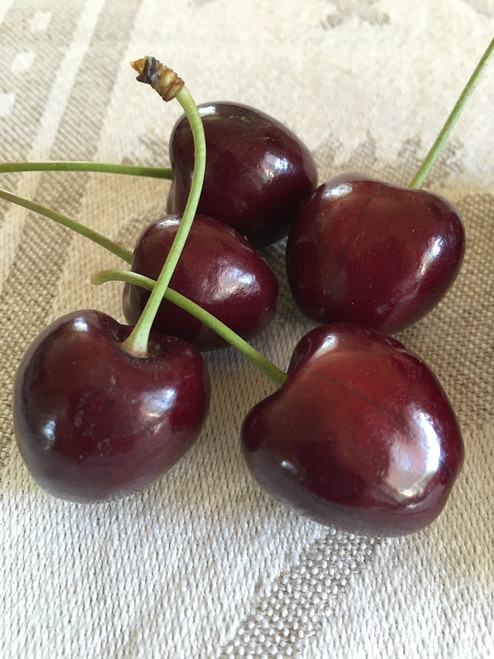


Lapins Cherry (Prunus avium ‘Lapins’) is a highly regarded self-pollinating sweet cherry developed at the Summerland Research Station in British Columbia, Canada from a cross between Van and Stella in 1965. Named after cherry breeder Dr Karlis O. Lapins, it produces heavy crops of large, mahogany-red fruit with firm flesh and rich sweet flavour. Ripening later than many cherries, Lapins is valued for extending the harvest season and for its resistance to rain splitting, reliability and excellent fresh eating quality.
- Uses: Eating fresh, cooking, preserving, desserts
- Pollination: Self-pollinating (self-fertile); can also pollinate other sweet cherries
- Harvest: Late season; January in southern Australia. Fruit colours early and should be left to fully ripen until deep mahogany, with flesh colour extending to the stone.
- Chill requirements: Suitable for temperate climates; moderate winter chill required (500 chill hours required)
- Attributes: Heavy cropping, vigorous, reliable and hardy; resists late frosts and resistant to rain-induced fruit splitting
- Features: Large dark red fruit, firm sweet flesh, attractive white spring blossom, late ripening
- Also known as: Sweet Cherry ‘Lapins’, Prunus avium 'Cherokee’, Cherry ‘Cherokee’
For helpful advice, see our Pollination Guide, and Care and Planting Instructions. Consider adding an engraved label to your order so you always know the name of your new tree—and order extra labels for the rest of your garden and orchard collection.
References incl:
Foundation Plant Services. (Accessed 24/5/2026). Cherry tree listings. University of California, Davis.
Cherry Growers Australia. (Accessed 24/5/2026). Cherry varieties.
Bright, J. and Marie, S. (2004) Cherry growing in NSW Agfact H5.1.2, Second Edition. NSW Agriculture.
Images: Copyright Heritage Fruit Trees
- Height:
- Dwarf