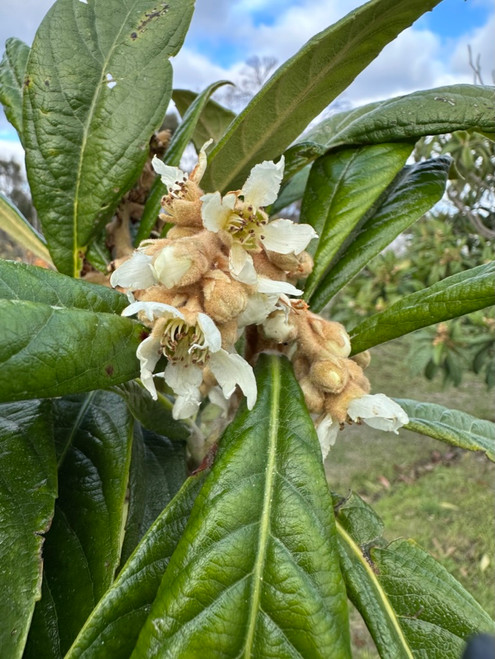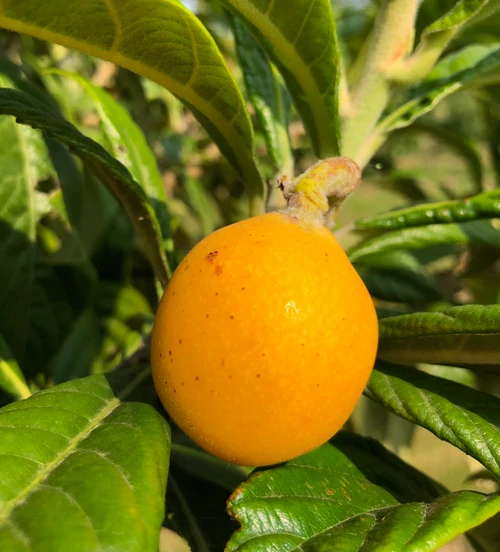


A standout for its impressively large fruit, the Enormity Loquat (Eriobotrya japonica ‘Enormity’) lives up to its name. This evergreen tree produces generous clusters of sweet, juicy, orange fruit in late winter to spring—just when fresh homegrown fruit is most welcome. With bold, glossy foliage and fragrant autumn blossoms, it makes a handsome feature tree as well as a productive backyard favourite. Originating from Asia and long cherished in Mediterranean gardens, loquats are both ornamental and rewarding to grow.
- Uses: Eating fresh, jams, chutneys, desserts, bottling
- Fruit size: About about 6–8 cm long (can vary with conditions)
- Pollination: Self-pollinating; improved fruit set with another loquat nearby
- Harvest: Late winter to early spring (August–October in southern Australia)
- Chill requirements: Low chill; suitable for temperate and mild sub-tropical areas
- Size: About 4–6 m x 3–5 m
- Attributes: Very large fruit; sweet flavour; reliable bearer; evergreen; moderate drought tolerance once established
- Features: Fragrant autumn flowers; bold tropical-looking foliage; attractive ornamental tree; fruit stores briefly when cool
- Also known as: Japanese Medlar
References:
Crane, J. H., & Balerdi, C. F. (2019). Loquat growing in the Florida home landscape. University of Florida IFAS Extension.
NSW Department of Primary Industries. (n.d.). Loquat. NSW DPI.
Rural Industries Research and Development Corporation. (2007). Loquat industry overview. Australian Government.
Images: Copyright Heritage Fruit Trees
Loquat flower image generic