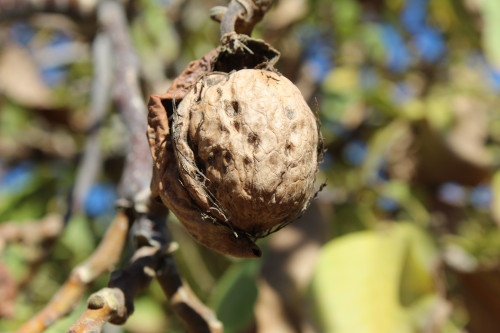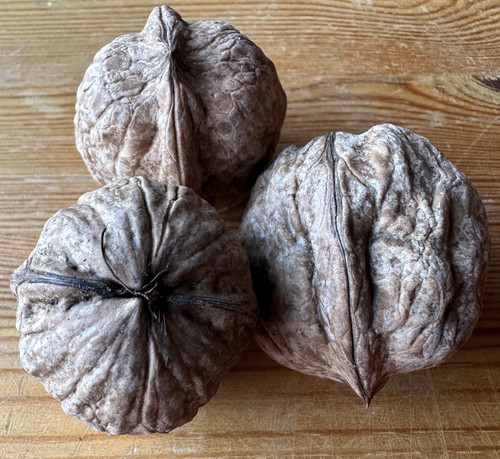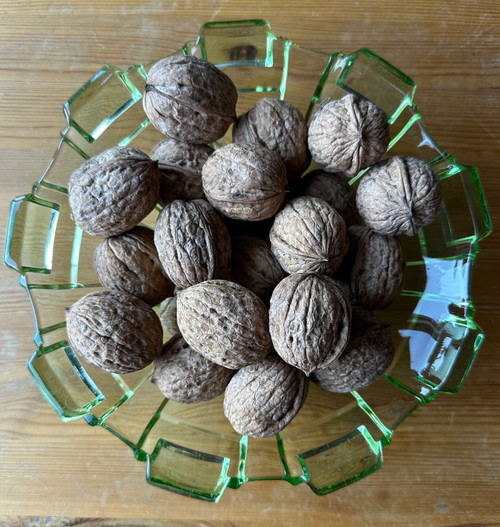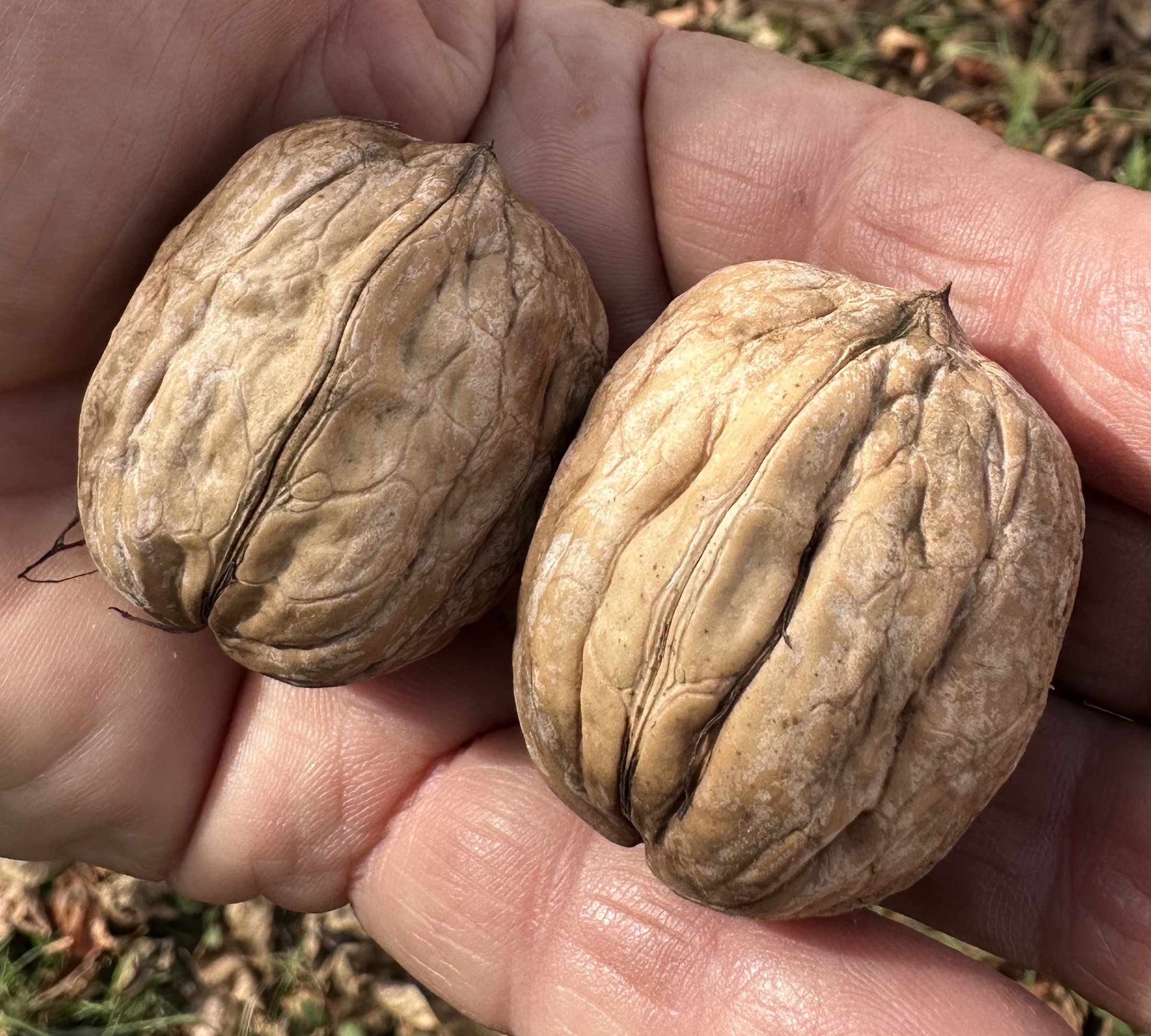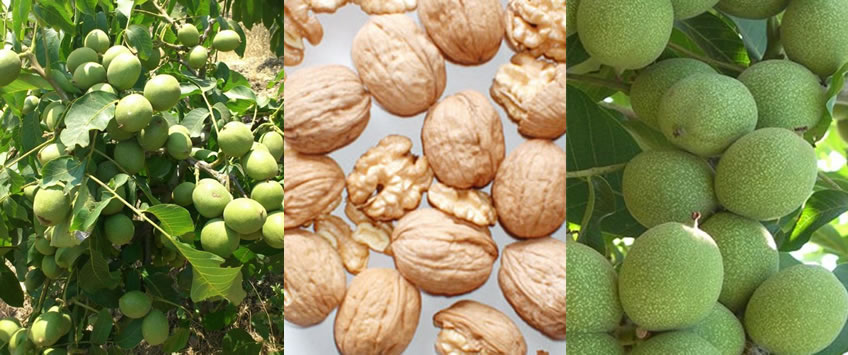


Chandler Walnut (Juglans regia 'Chandler') is one of the most widely planted English walnut varieties in the world, prized for its consistent high yields, excellent nut quality, and relatively compact tree form. Bred by the University of California, Davis and released in 1979, named after the Professor of Pomology, W.H. Chandler. Chandler is late leafing which helps avoid spring frost damage, making it a reliable choice for both commercial growers and home orchardists.
- Uses: Eating fresh, baking, cooking, preserving, oil
- Pollination: Partially self-pollinating; benefits from a compatible pollinator such as 'Tulare' or 'Franquette'
- Harvest: Mid to late season (April to May)
- Chill requirements: About 700 hours. Suited to temperate climates; moderate to high chill hours
- Size: 10–12 m high × 8–10 m wide
- Attributes: High productivity, late leafing, consistent cropping
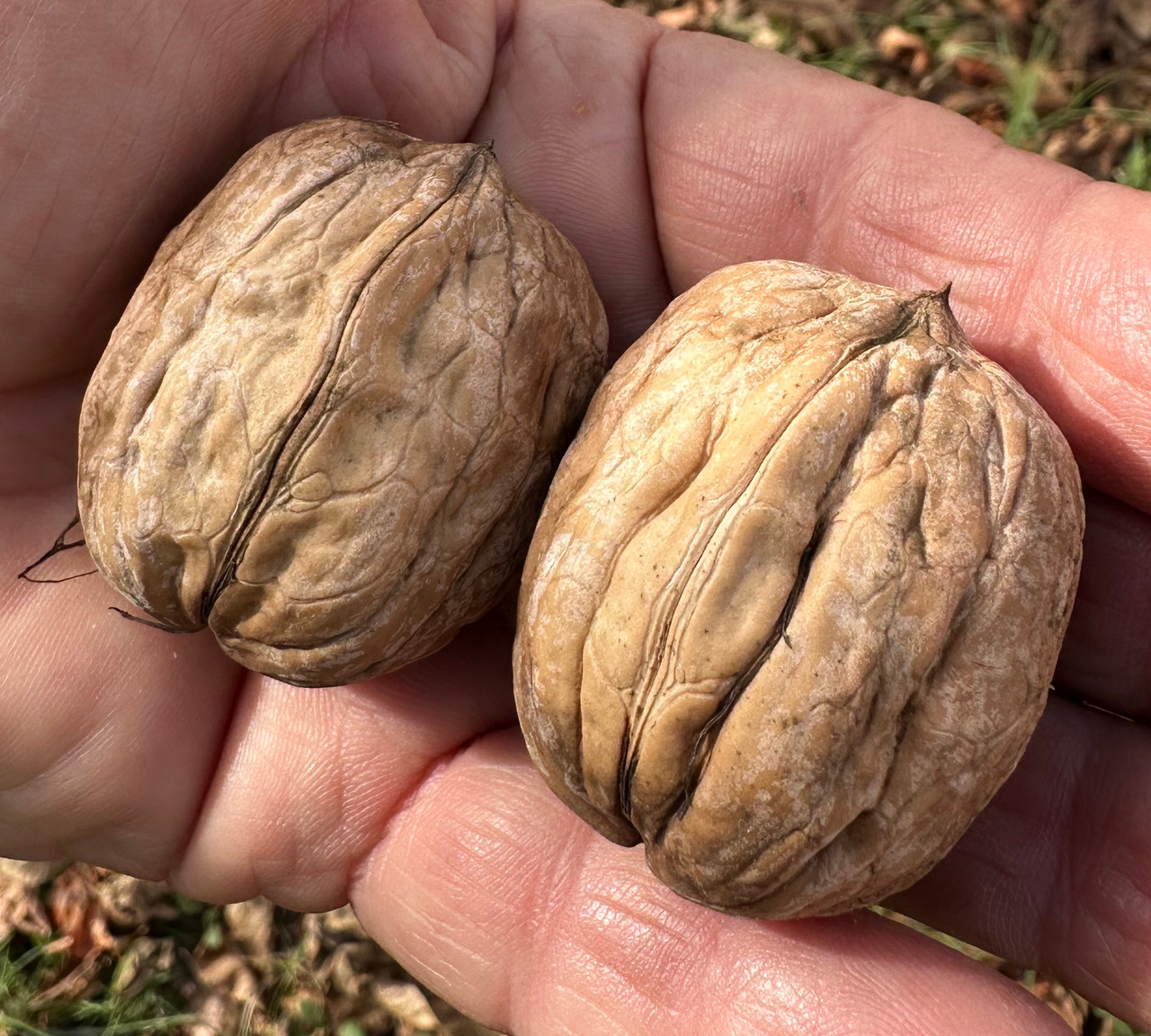
- Features: Thin-shelled so easy to crack, light-coloured kernels with excellent flavour; high nut-to-shell ratio; globally popular commercial variety
- Also known as: English Walnut 'Chandler', Persian Walnut 'Chandler'
Trees are grown on their own roots propagated from seed, not grafted.
Check out the book Just Nuts for practical, down-to-earth growing advice tailored to Australian conditions.
References:
McGranahan, G., & Leslie, C. (1991). Breeding and genetics of walnuts. Horticultural Reviews, 13, 155–201.
University of California Agriculture and Natural Resources. (n.d.). Chandler Walnut Cultivar Profile. Retrieved from https://walnut.ucanr.edu
Ramos, D. E. (Ed.). (1997). Walnut Production Manual. University of California, Agriculture and Natural Resources Publication 3373.
Images 1,2,3: Copyright Heritage Fruit Trees
Image 4