
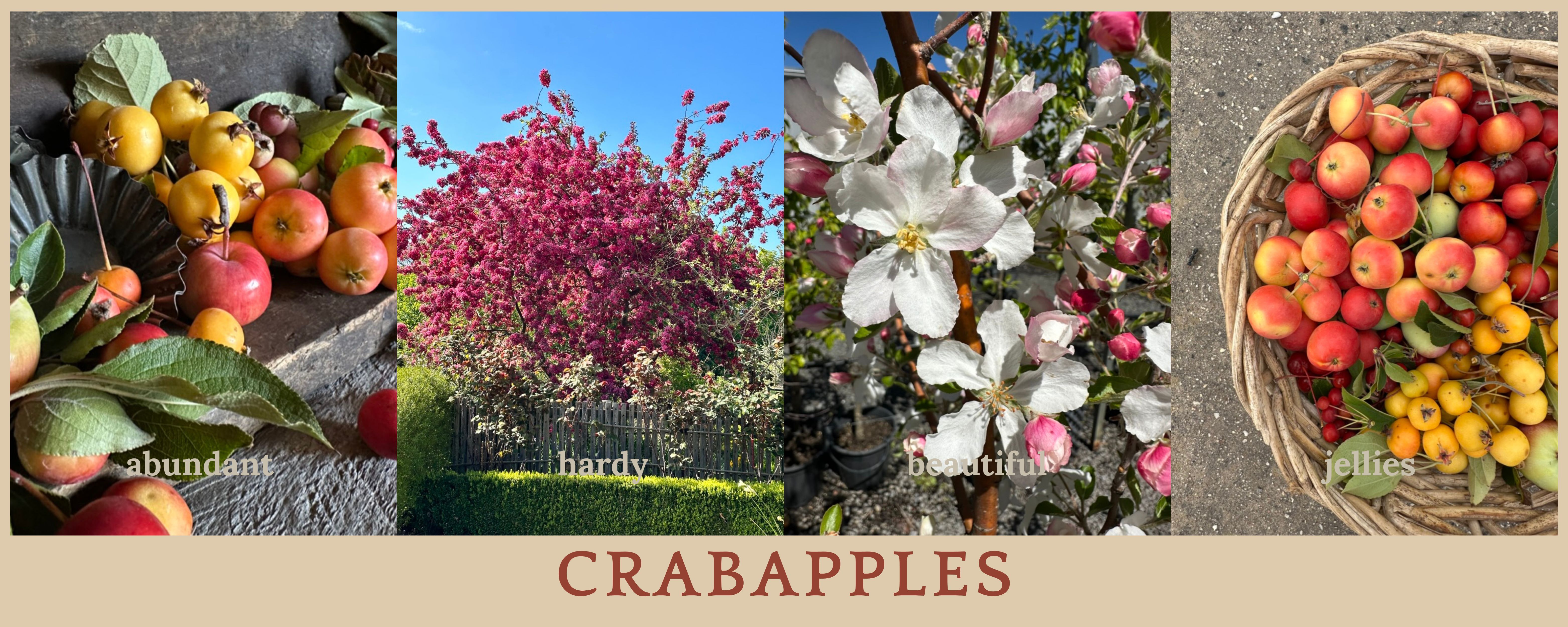
Crabapple growing guide
Why grow crabapples?
• Spectacular spring blossom in a wide range of colours.
• Attractive ornamental fruit that often lasts well into winter.
• Excellent pollinator trees for many apple varieties.
• Four seasons of interest with flowers, foliage, fruit and attractive branch structure.
• Hardy, adaptable trees that suit many Australian gardens.
Introduction
Crabapples belong to the genus Malus and are closely related to domestic apples. Traditionally, the name "crabapple" refers to apples with fruit less than about 5 cm in diameter, although the distinction is largely horticultural rather than botanical. Hundreds of named cultivars have been selected for their outstanding flowers, colourful fruit, attractive foliage, growth habit and disease resistance.
While many people grow crabapples purely as ornamental trees, they are also surprisingly useful. Many produce edible fruit suitable for jellies, preserves, cider blending and ornamental displays, while most flowering crabapples are valuable pollinators for nearby apple trees. Their long flowering season and abundant nectar also make them excellent trees for supporting bees and other beneficial insects.
Preferred growing conditions
Crabapples perform best in:
• Full sun (at least 6 hours daily)
• Well-drained soils
• Moderate fertility
• Good air circulation
• Consistent moisture during establishment
Although they thrive in deep fertile loams, crabapples are remarkably adaptable. Fiala (1994) notes they tolerate a wider range of soils than many ornamental trees provided they are not permanently waterlogged.
Climate
Crabapples are highly suited to cool temperate and temperate climates throughout southern Australia.
Most ornamental crabapples have winter chilling requirements similar to traditional apples, making them best suited to regions that experience a distinct winter. They generally perform less reliably in tropical or frost-free climates with very low winter chill.
They tolerate winter frosts well and many are exceptionally cold hardy.
Soil
Crabapples prefer:
• Deep, fertile soils
• Good drainage
• Slightly acidic to neutral pH (about pH 5.5–6.5 is ideal)
They will also grow successfully across a broader pH range (approximately 5.0–7.5) and are more tolerant of heavier clay soils than many ornamental trees, provided drainage remains good.
Avoid sites where water stands after rain or where soils remain permanently wet.
Planting
Plant during winter while trees are dormant.
Dig a hole wider rather than deeper than the root system so roots can spread naturally. Position the tree at the same soil level it grew in the nursery. Backfill with the existing soil and water thoroughly.
Apply mulch after planting, keeping it clear of the trunk.
For detailed instructions, see our Care & Planting Instructions.
Watering
Established crabapples tolerate moderate dry periods better than many flowering trees.
However:
• Water regularly during the first two or three summers.
• Water deeply rather than frequently.
• Avoid allowing newly planted trees to dry out completely, while not overwatering.
Trees growing in sandy soils require more frequent watering than those in heavier loams.
Feeding
Crabapples are not heavy feeders.
Apply compost annually.
Avoid excessive nitrogen, which encourages vigorous leafy growth at the expense of flowering.
Mulching
Maintain a 5–8 cm layer of organic mulch around the root zone.
Benefits include:
• moisture conservation
• reduced weed competition
• improved soil biology
• cooler root temperatures during summer
Keep mulch several centimetres away from the trunk to prevent collar rot.
Flowering
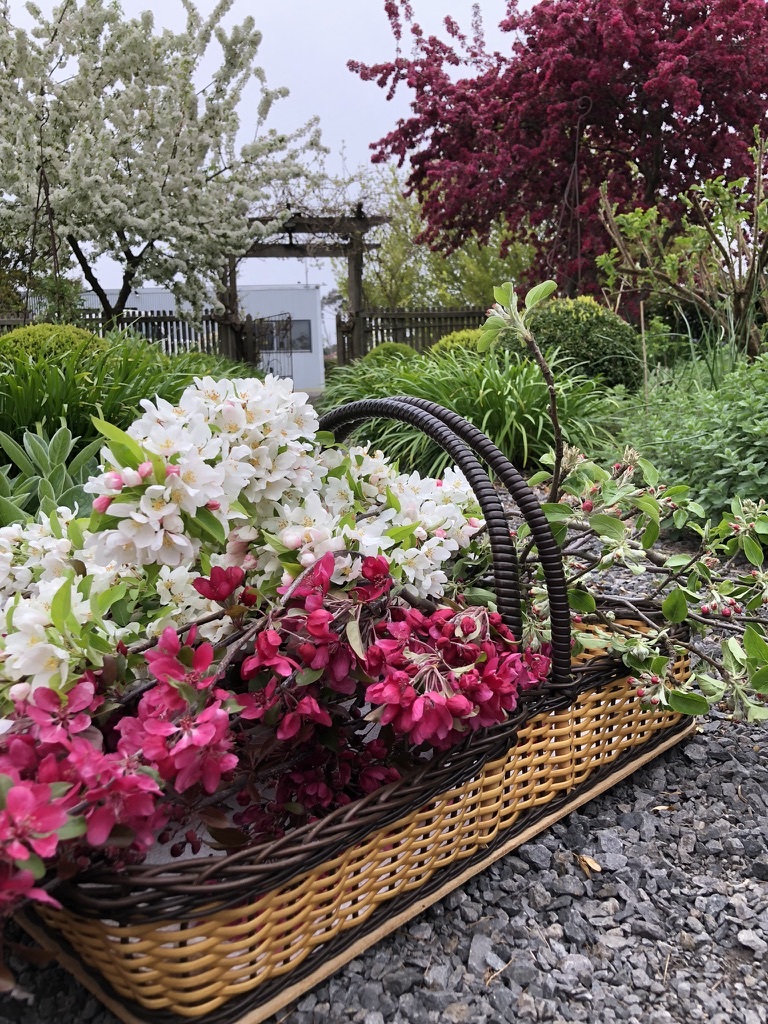
One of the greatest attractions of crabapples is their spectacular spring blossom.
Depending on variety, flowers may be:
• white
• blush pink
• deep pink
• crimson
• red
Flowering generally occurs from September to October in southern Australia, with individual cultivars varying slightly.
Many cultivars flower so heavily that branches are almost hidden beneath blossom.
Fruiting
Following flowering, fruits develop through summer before colouring in late summer and autumn.
Fruit may be:
• yellow
• green
• gold
• orange
• red
• crimson
• burgundy
• purple
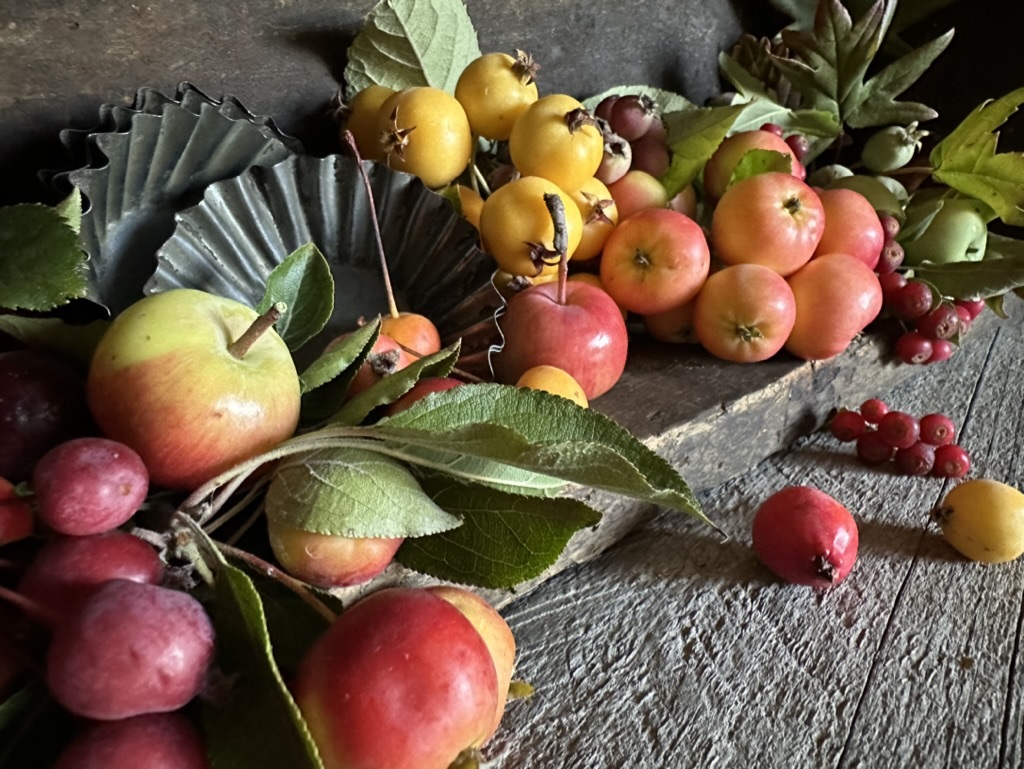
Some cultivars retain their fruit into winter, providing long-lasting ornamental value and food for birds.
Fruit size varies from about 1 cm to almost 5 cm depending on the variety.
Harvesting
Harvest depends on the intended use. For cooking or preserves, fruit is generally picked from late summer through autumn (February–May) depending on the cultivar and climate. Many ornamental varieties are deliberately left on the tree for their winter display.
Pollination
Most flowering crabapples produce abundant viable pollen and are regarded as excellent pollinators for domestic apples.
Because flowering periods vary between cultivars, choose crabapple varieties that flower at the same time as nearby apple trees.
In commercial orchards, specially selected crabapple pollinisers are widely used to improve apple pollination.
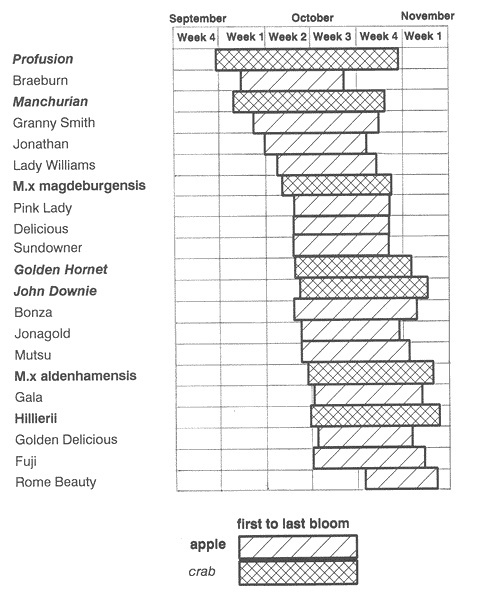
Table above: Flowering times of some crabapples and apples (from DPIRD based on Orange in NSW).
Uses
Crabapples are incredibly versatile. They can be grown for:
• ornamental feature trees
• avenue planting
• cottage gardens
• wildlife gardens
• attracting pollinators
• edible jellies and preserves
• cider blending
• floral arranging
• pollinating apple orchards
The colourful fruit is also prized for decorative autumn and winter displays.
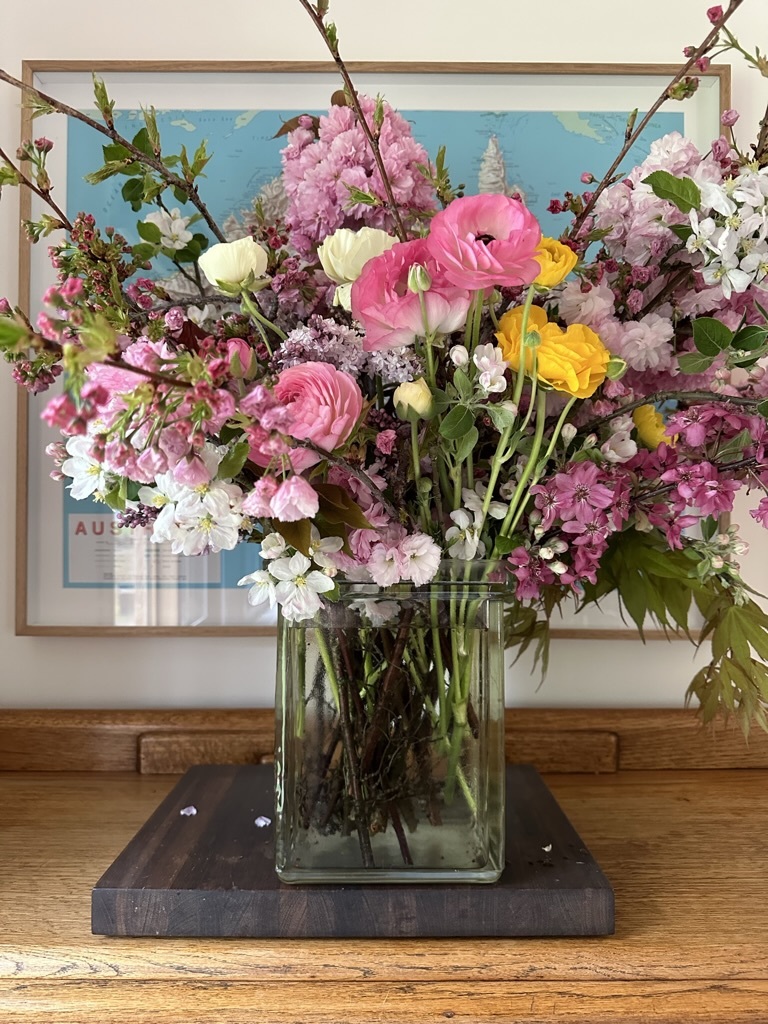
For the vase, crabapples typically last about 7 days. If picking stems for blossom, choose stems where about 25% of the blossom is open and remove the foliage from the bottom third. If picking for the fruit, strip most of the leaves. Stems can be picked for foliage when the leaves are leathery.
Crabapples can be useful trees in a firewise garden when positioned and maintained appropriately.
Pruning
Most crabapples require only light pruning.
Remove:
• dead wood
• damaged branches
• crossing branches
• vigorous water shoots
• suckers arising below the graft
Avoid heavy routine pruning, as the natural branch architecture is one of the tree's greatest ornamental features.
Large pruning cuts should be made correctly to promote rapid healing.
Pests and diseases
Crabapples are generally robust, especially modern disease-resistant cultivars.
Potential problems include:
• Apple scab
• Powdery mildew
• Aphids
• Scale insects
• Codling moth (occasionally)
Good air circulation and sanitation reduce disease problems.
Growing in pots
Many smaller or naturally compact crabapple cultivars can be grown successfully in large containers.
Use:
• a premium potting mix
• a container with excellent drainage
• regular watering during summer
• annual fertilising
Container-grown trees may require occasional root pruning or repotting after several years.
Frequently Asked Questions
Are crabapples edible?
Yes. Nearly all crabapple fruit is edible, although flavour varies considerably. Some are pleasantly tart while others are quite astringent. Many are excellent for jelly, preserves and cider.
Will a crabapple pollinate my apple tree?
Most flowering crabapples are excellent pollinators for apples, provided their flowering times overlap.
Do crabapples lose their leaves?
Yes. Crabapples are deciduous trees with attractive autumn colour before winter leaf fall.
Are crabapples good for wildlife?
Yes. Their flowers provide nectar and pollen for bees and other beneficial insects, while the fruit feeds many bird species through autumn and winter.
How large do crabapples grow?
Depending on cultivar, mature size ranges from about 2–8 m tall, with upright, spreading or weeping forms available.
Top tips for success
• Plant in full sun for maximum flowering.
• Ensure excellent drainage.
• Water well during establishment (and don’t overwater).
• Mulch generously but keep mulch away from the trunk.
• Match flowering times if using them to pollinate apple trees.
• Avoid excessive pruning.
Further reading and watching
• Read our Care & Planting Instructions before planting.
• Explore our individual crabapple variety pages to compare flower colour, fruit colour and mature size.
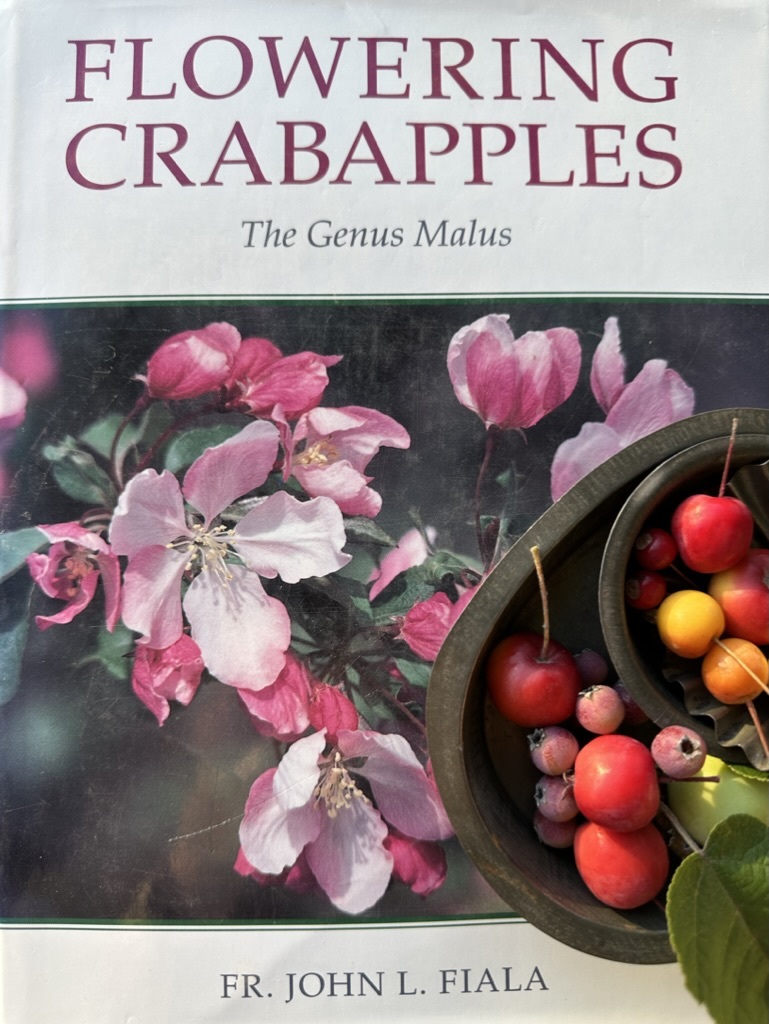
• The magnificent book, Flowering crabapples: the genus Malus, by Father John L. Fiala is packed with interesting information. Read about Fiala, the internationally respected authority on crabapples and lilacs.
RHS Recommended: Award of Garden Merit
Many crabapple cultivars have received the Royal Horticultural Society Award of Garden Merit (AGM) for outstanding garden performance. Examples include cultivars such as Malus 'Golden Hornet', 'John Downie' and several others. Individual cultivar pages on our website identify AGM recipients where applicable.
Explore our collection of crabapples
Discover flowering crabapples selected for outstanding blossom, colourful fruit, attractive form and reliable garden performance.
Get a label with that
Make sure you never mix up your plants! Add an engraved label to your new order—or grab custom-engraved labels if your plants are already in the ground. These durable markers make it easy to remember which plants are where. Happy gardening!
References
Brooklyn Botanic Garden. (2018). Marvelous Malus.
Fiala, J. L. (1994). Flowering crabapples: The genus Malus. Timber Press.
Floret. (2022). Crabapples: A tree for all seasons.
Benzakein, E., Jorgensen, J., Chai, J. and Benzakein, C. (2020) Floret Farm’s a year in flowers. Chronicle Books, San Francisco. ISBN 9781452172897.
Benzakein, E., Jorgensen, J., Chai, J. and Benzakein, C. (2020) Floret Farm’s a year in flowers. Chronicle Books, San Francisco. ISBN 9781452172897.
NSW Department of Primary Industries. (n.d.). Crabapple pollinators.
Royal Horticultural Society. (n.d.). Plants with the Award of Garden Merit – Malus.