
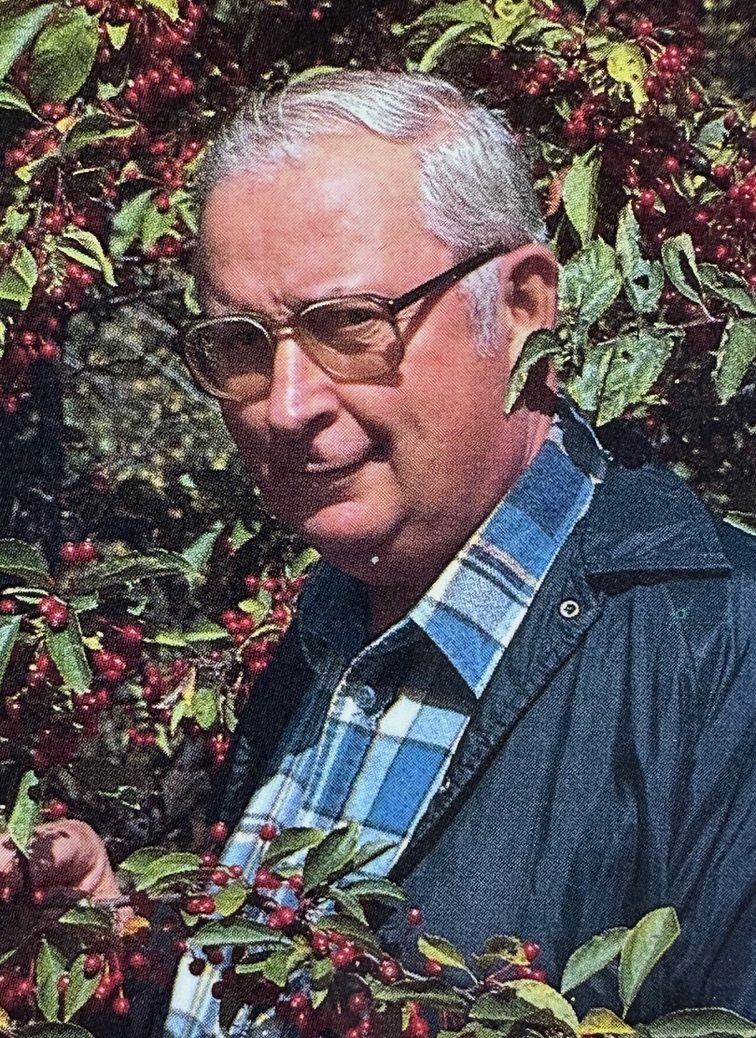
Father John L. Fiala (1924–1990)
Plant breeder, author and internationally respected authority on lilacs and flowering crabapples.
Father John L. Fiala was one of the twentieth century's most influential ornamental horticulturists and an internationally respected authority on lilacs (Syringa) and flowering crabapples (Malus). Over more than four decades he made lasting contributions through plant breeding, research and writing, while also pursuing a vocation as a Catholic priest.
Raised on a farm in Ohio, Fiala developed a fascination with plants from an early age. By the age of sixteen he had established his own orchard and experimental garden, where he began exploring controlled pollination and the inheritance of plant characteristics. His professional career later encompassed parish ministry, school leadership and university teaching, including more than twenty years as Professor of Clinical Psychology at John Carroll University. Yet it was the countless hours spent at his home garden, Falconskeape Gardens, that established his international reputation as a horticulturist.
Fiala's greatest contributions were to lilacs and flowering crabapples. A founding director of the International Lilac Society, he became one of the world's leading lilac hybridisers, introducing over 50 named cultivars and helping promote the study and appreciation of the genus internationally. In recognition of his achievements, he received the prestigious Thomas Roland Medal from the Massachusetts Horticultural Society in 1980. His landmark book Lilacs: The Genus Syringa (later updated as Lilacs: A gardener's encyclopedia) remains one of the most comprehensive references ever published on lilacs, combining botanical scholarship with practical guidance for gardeners and growers.
His work with flowering crabapples was equally influential. Beginning with an orchard his parents gave him as a boy, Fiala spent more than fifty years breeding and evaluating Malus. He introduced about 120 named crabapple cultivars and pioneered the use of polyploid breeding, including tetraploid and octoploid forms, to broaden the ornamental potential of flowering crabapples. His definitive work Flowering Crabapples: The Genus Malus remains one of the principal references for gardeners, botanists and plant breeders.
Although best known for his work with lilacs and crabapples, Fiala's horticultural interests extended well beyond these genera. He hybridised and collected peonies, buckeyes (Aesculus), daylilies (Hemerocallis), oaks and many other ornamental plants, always driven by a desire to improve garden plants through careful observation and scientific experimentation. His writings reveal an enduring belief that horticultural knowledge should be shared generously and that the greatest advances came through collaboration between dedicated gardeners and plant breeders.
Today, Father John L. Fiala's influence is seen not only in the cultivars he introduced, but also in the generations of gardeners, breeders and horticulturists who continue to rely on his books (including us at Heritage Fruit Trees). His scholarship, generosity and lifelong curiosity helped shape modern understanding of lilacs and flowering crabapples, ensuring his legacy continues to inspire those who grow and study these remarkable plants.
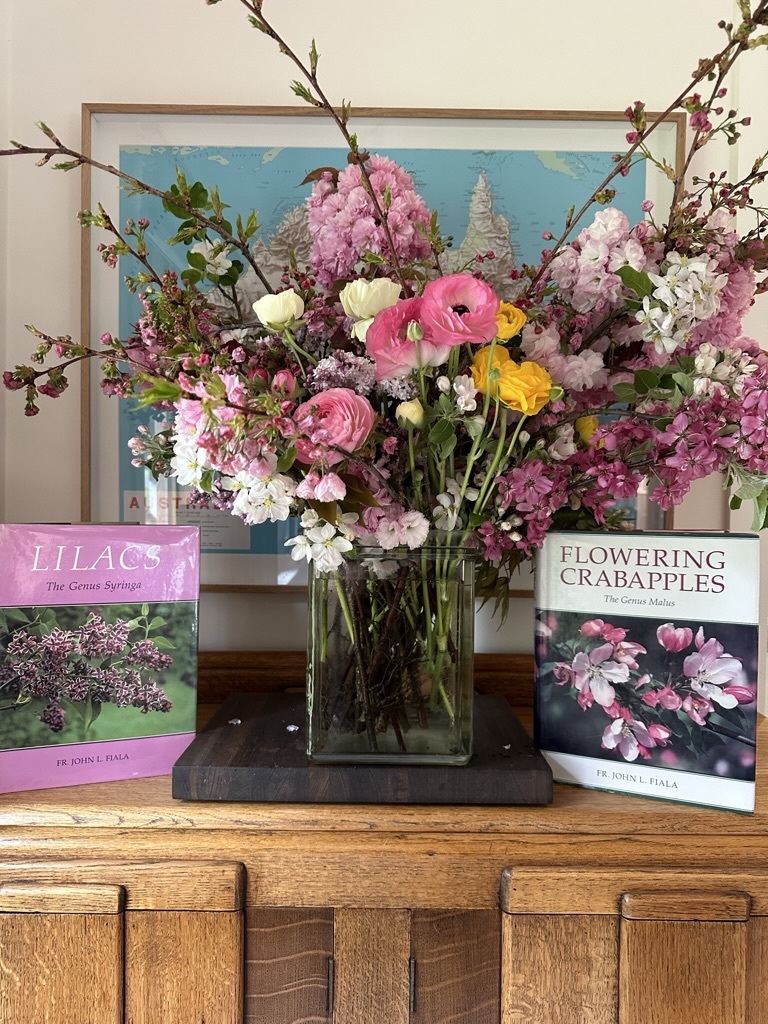
References incl:
Fiala, J. L. (1988) Lilacs: the genus Syringa. Timber Press, Portland, Oregon, USA. ISBN 0-88192-001-0.
Fiala, J. L. (2008). Lilacs: A gardener's encyclopedia (F. Vrugtman, Rev. ed.). Timber Press.
Fiala, J. L. (1994) Flowering Crabapples The Genus Malus. Portland, Oregon: Timber Press.
International Lilac Society. (1980). Proceedings of the International Lilac Society (Vol. 9).
Thanks to Mark L. DeBard, MD (retired), International Lilac Society President, Columbus, Ohio, for correspondence (July 2026) on Father John L. Fiala.
Images: Copyright Heritage Fruit Trees