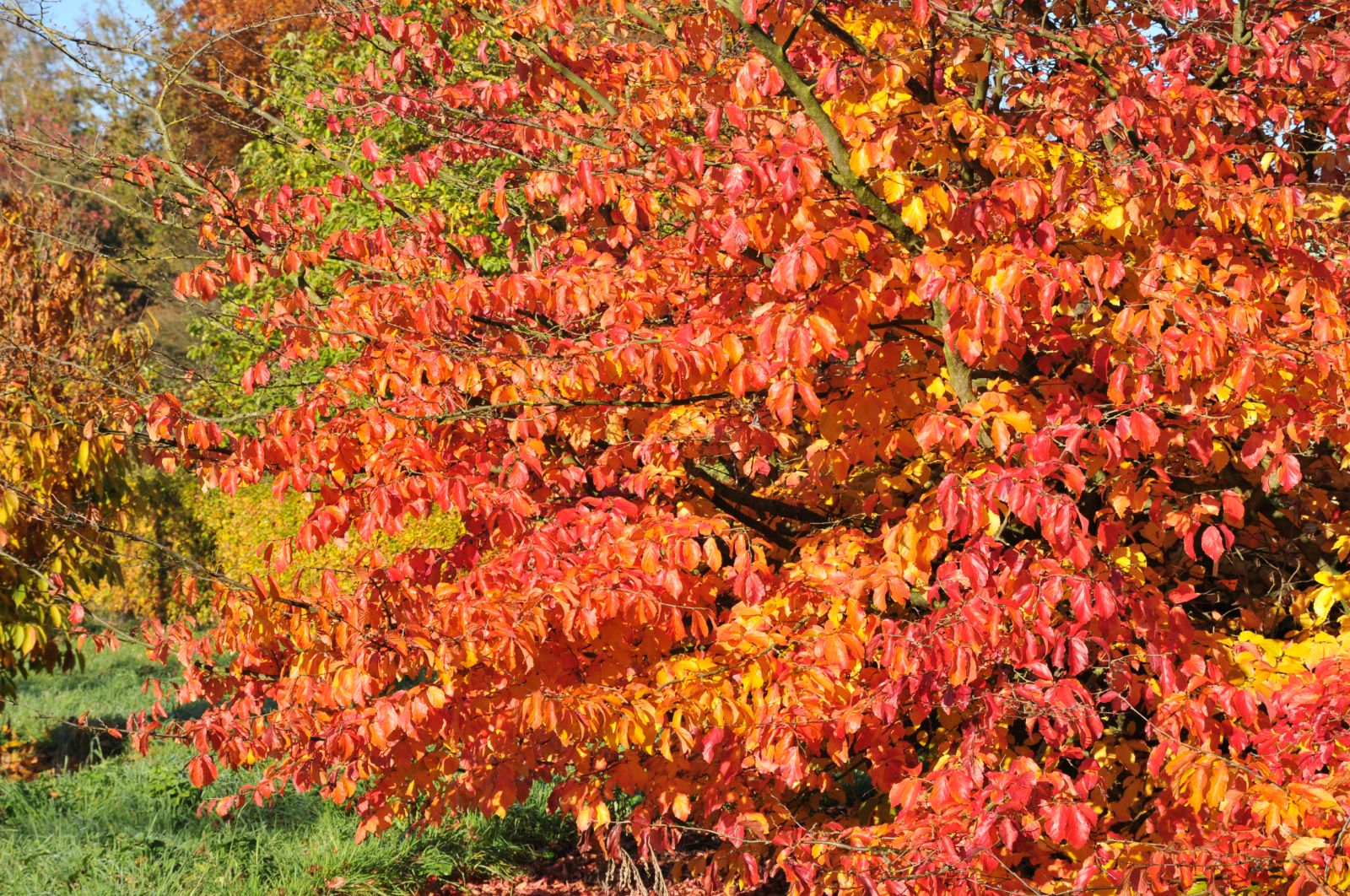

Parrotia (Parrotia persica), also known as Persian Ironwood, is one of the finest ornamental trees for year-round interest. It is especially admired for its spectacular autumn foliage, when the rounded green leaves turn brilliant shades of yellow, orange, scarlet, crimson and purple. Small, tassel-like crimson flowers appear on the bare branches in late winter before the leaves emerge, while older trees develop beautifully exfoliating bark in mottled shades of grey, green and cream. Native to the forests bordering the Caspian Sea in Iran and Azerbaijan, it is a long-lived, hardy specimen tree with outstanding landscape value. RHS Recommended: Award of Garden Merit.
Need help? Visit our care & planting instructions and autumn foliage guide for practical advice.
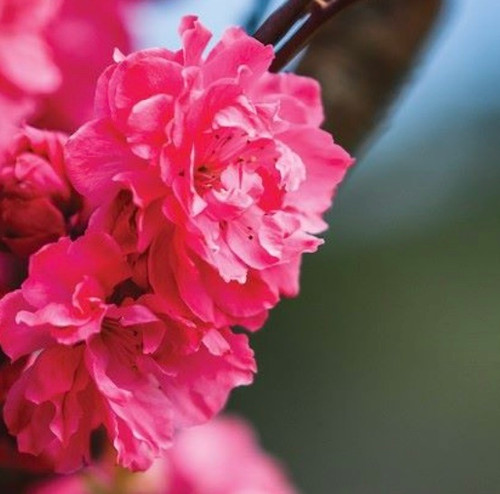
- Flowers: Small crimson flowers with conspicuous red stamens; lightly ornamental; late winter to early spring (July–August in southern Australia)
- Size: Up to about 8–12 m high × 6–10 m wide depending on growing conditions
- Uses: Feature tree, shade tree, parks, large gardens, autumn colour, avenue planting
- Attributes: Hardy, long-lived, drought tolerant once established, adaptable to a range of soils, moderate growth rate, generally pest and disease resistant
- Features: Outstanding autumn foliage; attractive exfoliating bark on mature trees; rounded crown; smooth grey bark becoming mottled with age
- Also known as: Persian Ironwood
Keep your collection labelled. Add a durable engraved plant label to your order, and order extra labels for existing plants so every tree in your collection stays correctly named.
References incl:
Dirr, M. A. (2009). Manual of woody landscape plants: Their identification, ornamental characteristics, culture, propagation and uses (6th ed.). Stipes Publishing.
Royal Horticultural Society. (n.d.). Parrotia persica. RHS. (Plant profile and Award of Garden Merit information).
Royal Botanic Gardens, Kew. (n.d.). Plants of the World Online: Parrotia persica (DC.) C.A.Mey. (Taxonomy and distribution).
Image: Christophe Crock (accessed 4/8/2026).