
Walnut history in Australia
The English or Persian Walnut (Juglans regia) is one of the world's oldest cultivated food trees. Archaeological evidence shows walnuts were gathered in prehistoric times, with remains found in caves in northern Iraq and at Neolithic Swiss lake settlements dating back more than 7,000 years. Native to a broad region extending from Turkey and Iran through Afghanistan to northern India, walnuts spread westward with trade and cultivation, becoming known to the Greeks, prized by the Romans and eventually established throughout Europe.
In medieval Europe, walnuts were far more than a seasonal delicacy. Fresh kernels, dried nuts and walnut meal stored well and provided a dependable source of food when cereal crops failed through drought or disease. Their nutritional value, long storage life and versatility helped establish the walnut as one of Europe's most important traditional food trees.
Walnuts arrived in Australia with early European settlers and quickly proved well suited to the cooler districts of southern Victoria and Tasmania. Trees were planted around Hobart from about 1820, with further plantings recorded in Victoria from the 1840s onwards. By the early twentieth century, sizeable orchards had been established, including commercial plantings in north-east Victoria, helping to cement the walnut as part of Australia's orchard heritage.
For much of Australia's history, walnuts were grown from seed. Unlike many fruit trees, walnut seedlings often produce worthwhile nuts and may resemble their parent reasonably closely, although every seedling is genetically unique. This practical characteristic made seedling trees an economical and reliable way to establish orchards long before grafted cultivars became widely available. Many of Australia's magnificent century-old walnut trees began life as seedlings and continue to produce abundant crops today.
As knowledge of pollination, disease resistance and nut quality improved, selected cultivars from Australia, Europe and North America were introduced and propagated by grafting. These named cultivars generally crop at a younger age and offer more predictable growth, nut quality and pollination characteristics. Nevertheless, seedling-grown walnuts remain valued for their vigour, longevity and ability to develop into productive trees that can provide shade and harvests for generations.
Today, whether grown from seed or as a grafted cultivar, a walnut is an investment in the future. Given space, patience and the right conditions, it can become one of the longest-lived and most rewarding trees in the orchard, producing crops for many decades while becoming part of the landscape and the family's story.
See our walnut range and walnut growing guide.
References incl:
Gilbert, A. (2005) Just nuts. Hyland House Publishing, Flemington, Australia.
Glowinski, L. (1997) The complete book of fruit growing in Australia. Lothian, Port Melbourne, Australia.
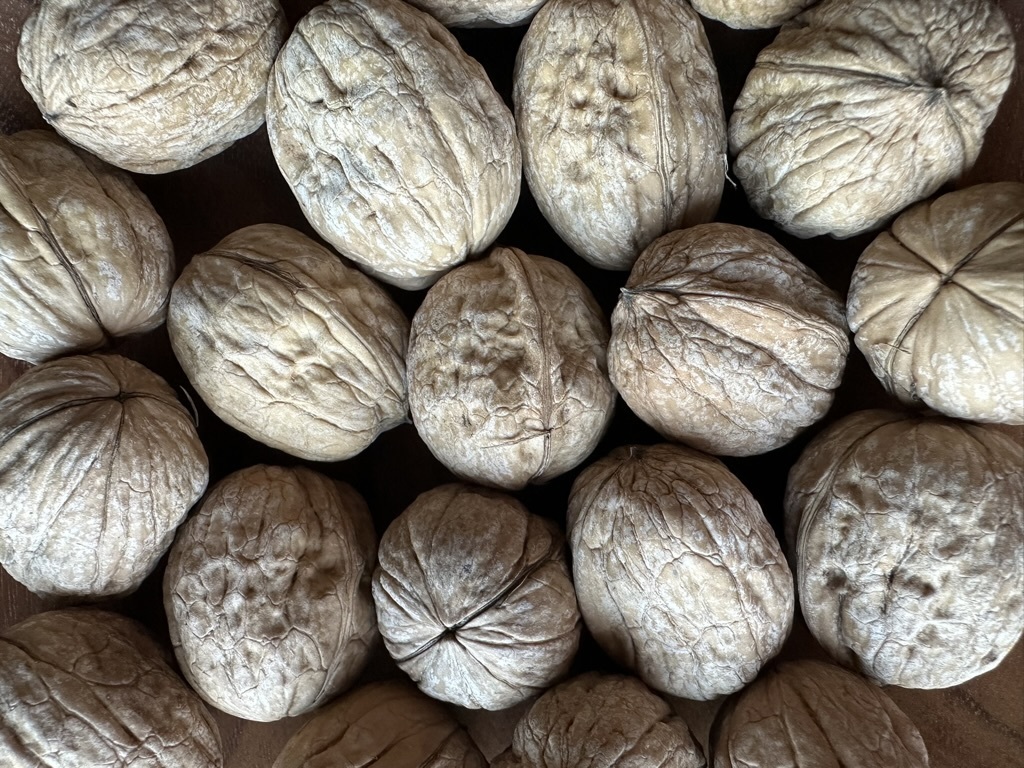
Image: Copyright Heritage Fruit Trees