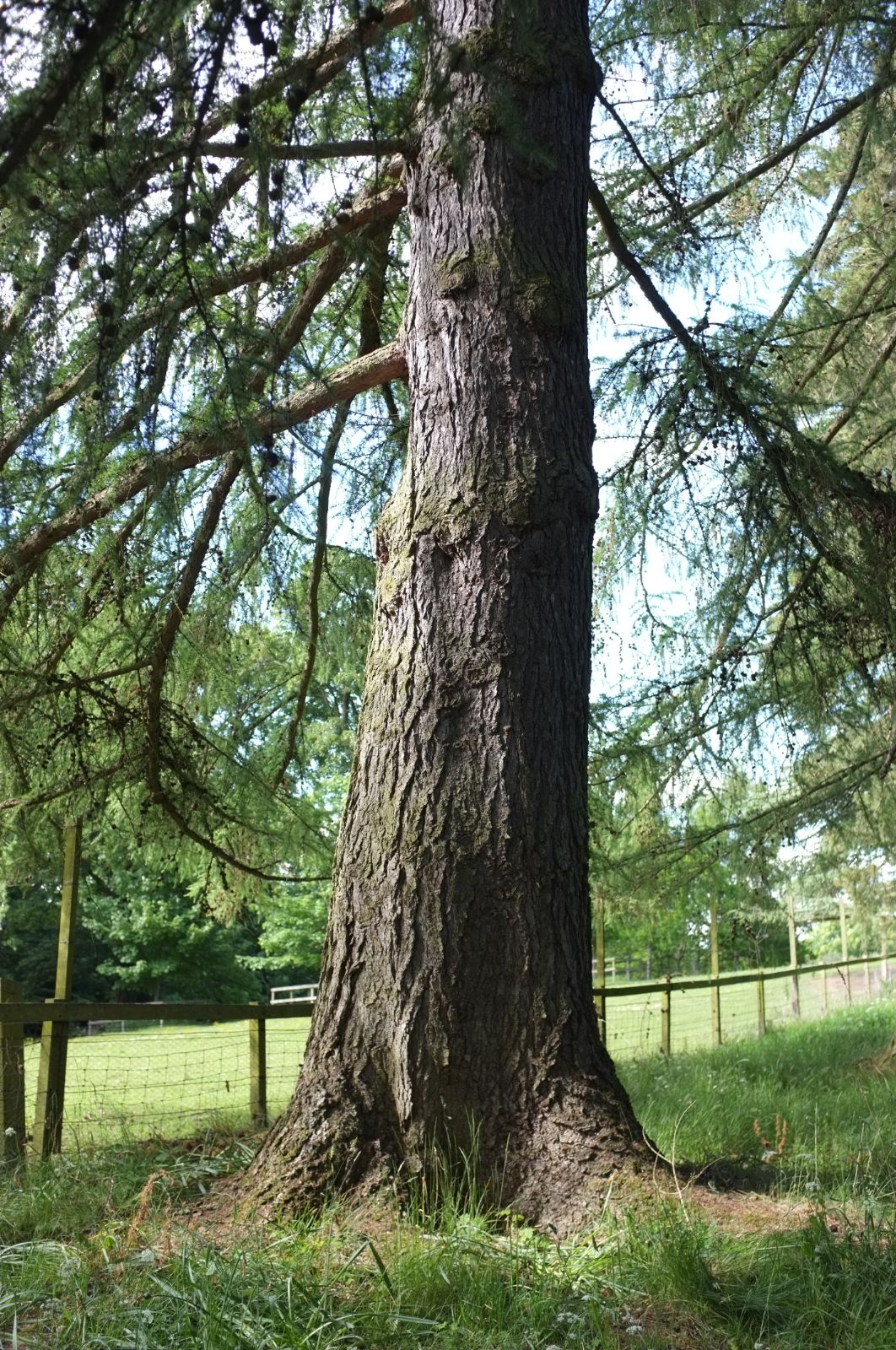

Japanese Larch (Larix kaempferi) is a graceful deciduous conifer prized for its soft blue-green needles, elegant pyramidal form and brilliant golden autumn colour before the foliage is shed for winter. Native to the mountains of central Japan, it is among the fastest-growing larches and makes an outstanding feature or avenue tree. Its decorative rose-pink spring cones, attractive flaky bark and adaptability to cool climates have made it a favourite in parks, large gardens and forestry plantings worldwide. RHS Recommended: Award of Garden Merit (1993).
Need help? Visit our care & planting instructions and autumn foliage guide for practical advice.
- Flowers: Small male cones yellow to orange; female cones rosy pink to crimson, about 1–2 cm, appearing in early to mid spring (September–October).
- Size: About 20–30 m high × 8–12 m wide.
- Uses: Feature tree, avenue planting, parks, forestry, shelter belts, bonsai.
- Attributes: Fast-growing, long-lived, very hardy, tolerant of cold, wind and snow; prefers moist, well-drained soils and full sun.
- Features: Soft blue-green needles borne in clusters, turning rich golden-yellow in autumn before falling; reddish-brown flaky bark; persistent small ovoid cones remain on branches through winter.
- Also known as: Larix leptolepis (synonym).
Keep your collection labelled. Add a durable engraved plant label to your order, and order extra labels for existing plants so every tree in your collection stays correctly named.
References incl:
Trees and Shrubs online (accessed 29/7/2026). Larix kaempferi.
Rushforth, K. (1987) Conifers. Christopher Helm Publishers, Kent, UK.
Rowello, R. J. (1996) Ornamental conifers for Australian gardens. University of NSW Press, Sydney.
Image: Trees and Shrubs Online, Owen Johnson (accessed 29/7/2026).