
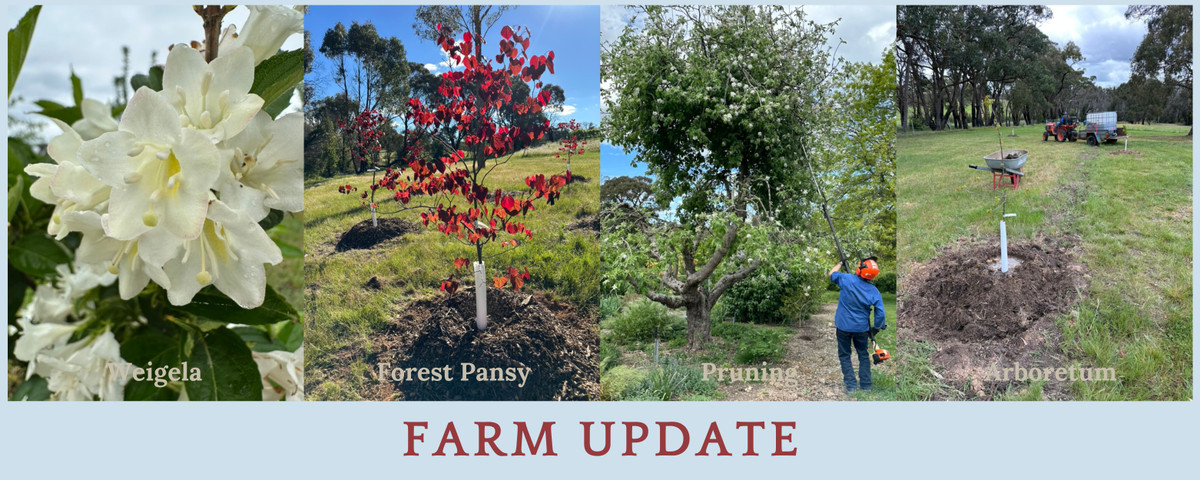
Farm update 1 November 2026
Posted by Kate Blood on 31st Oct 2026
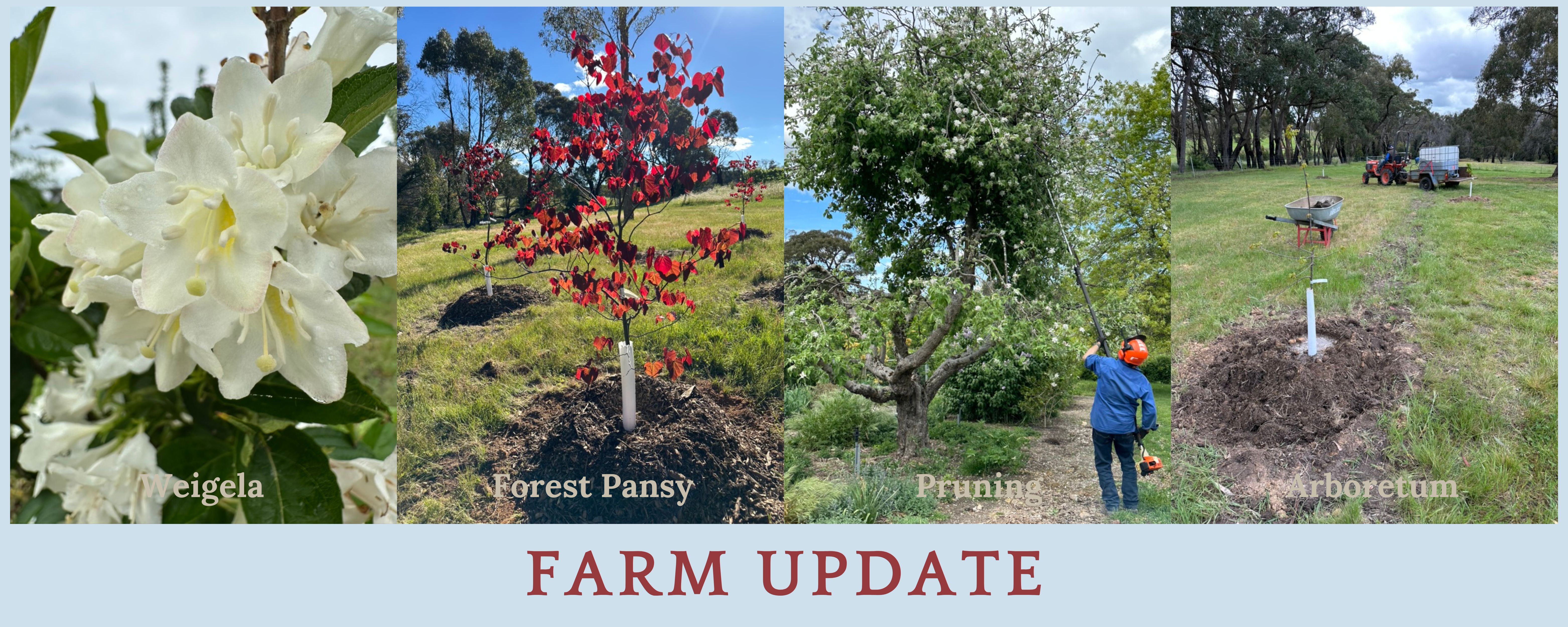
New trees, spring flowers and plenty happening at Glenview Park
It's been another busy week at Glenview Park, with some major tree planting underway, plenty of spring colour and the usual long list of jobs to tackle before summer arrives.
Creating the Glenview Park Arboretum
One of our biggest projects this spring has been establishing a new arboretum to the east and south of our home and garden.
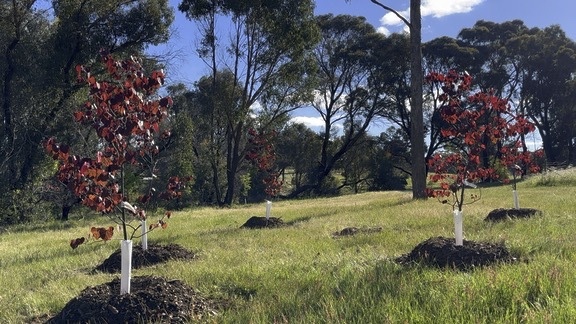
This week, the team has planted about 50 ornamental trees, including oaks, horse chestnuts, liquidambars and a range of other species. It's exciting to imagine how this area will look in the years ahead as the trees mature and become part of our extended garden landscape.
As well as providing shade, beauty and habitat, these trees will contribute to our longer-term bushfire resilience by helping to intercept windborne embers. Their location and ongoing management are important considerations in our overall bushfire preparation.
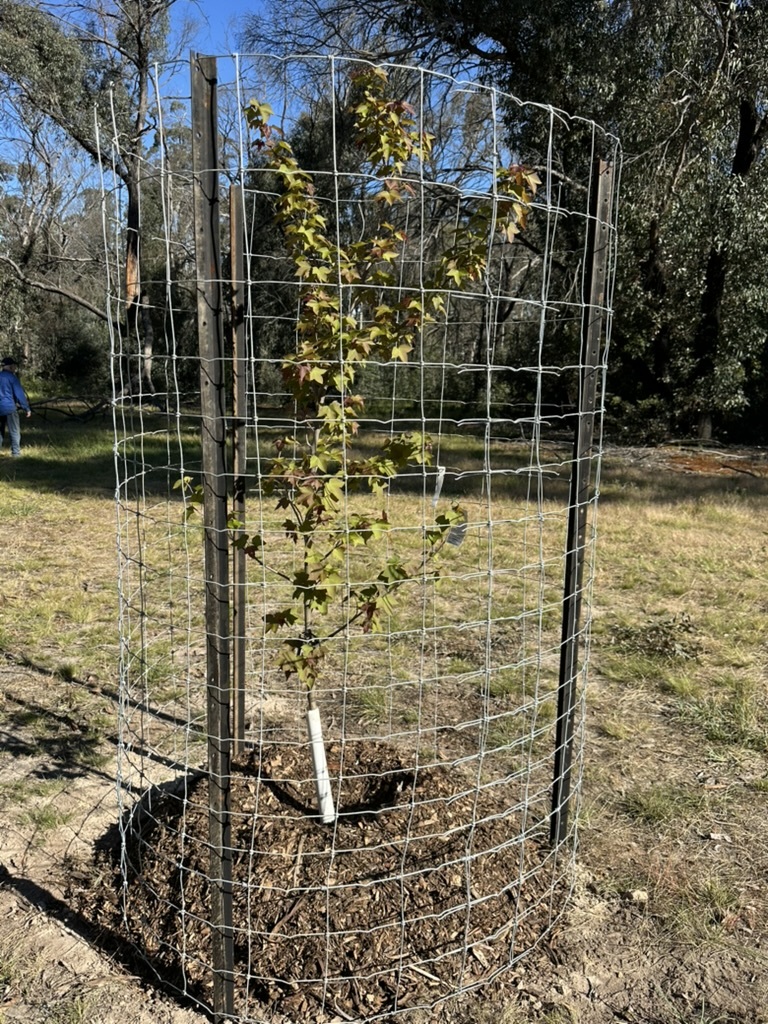
Of course, planting the trees is only part of the job. Protecting them while they establish is equally important, particularly with deer, rabbits, hares and other browsing animals around.
We've installed substantial tree guards using the same deer-proof fencing that we've used successfully around parts of our nursery production paddocks since the 2024 bushfire. Each guard is secured with three tall Waratah stakes to prevent deer and other animals from lifting or distorting the fencing. We've also fitted reusable trunk wraps to protect against rabbits and hares.
Our tip: Don't underestimate the value of protecting newly planted trees. When you add up the cost of advanced trees, the labour involved in planting and mulching, and the time you'll spend hand watering them through their first year or two, good protection is a very worthwhile investment.
We're looking forward to watching this new part of Glenview Park develop.
Spring colour around the garden
The main flush of spring blossom has now finished, but there's still plenty to enjoy.
Our Flowering Cherry 'Shimidsu' is putting on a glorious display of soft pink blossom, while the Wisterias along the shed verandah have been absolutely beautiful. Weigelas and roses are also flowering, bringing more colour to the gardens.
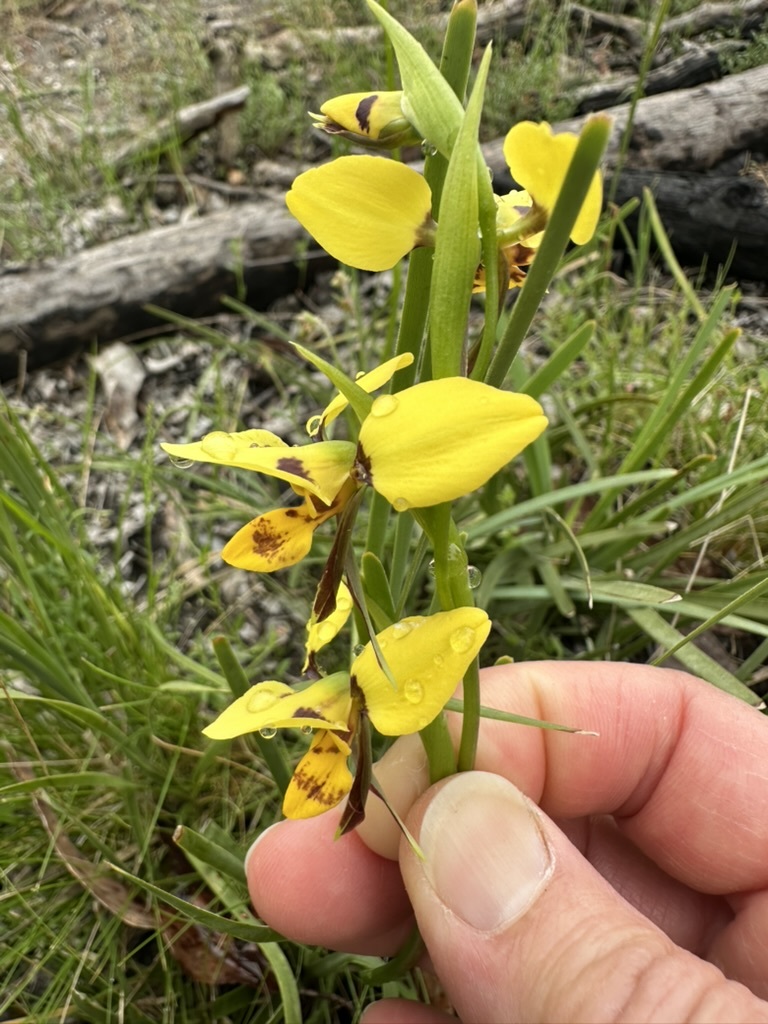
Out in the bushland, the wildflowers are continuing their wonderful spring display. We've been enjoying orchids, trigger plants, milkmaids, yam daisies, rice flowers, chocolate lilies, bulbine lilies and flowering Lomandra.
The young magpies have also fledged their nests and are now exploring the gardens and farm. They're entertaining to watch as they discover their surroundings and gradually become more independent.
From blossom to fruit – time to get the nets ready!
With most of the fruit tree blossom now finished, we're entering that short period between flowering and the rapid development of young fruit.
One of our priorities over the next few weeks is getting the cherry trees netted. If we want to enjoy our own cherries over the summer festive period, we need to make sure the birds don't beat us to the harvest!
Seasonal reminder: Don't leave fruit tree netting until the fruit starts to colour. Birds can begin feeding well before fruit is fully ripe. Check that your netting is in good condition, properly secured and compliant with wildlife-safe netting requirements.
We've also shared a recent video on social media showing the progress in our Pear Garden, where the recovery and replanting work continues following the bushfire.
Even our own fruit trees have to wait for pruning!
You might imagine that with a nursery specialising in fruit trees, all our own trees would be perfectly pruned every year.
Not quite!
Winter is our busiest time in the nursery, with thousands of barerooted trees to prepare and send to customers. Unfortunately, that means our own fruit trees don't always get the timely attention we'd like to give them.
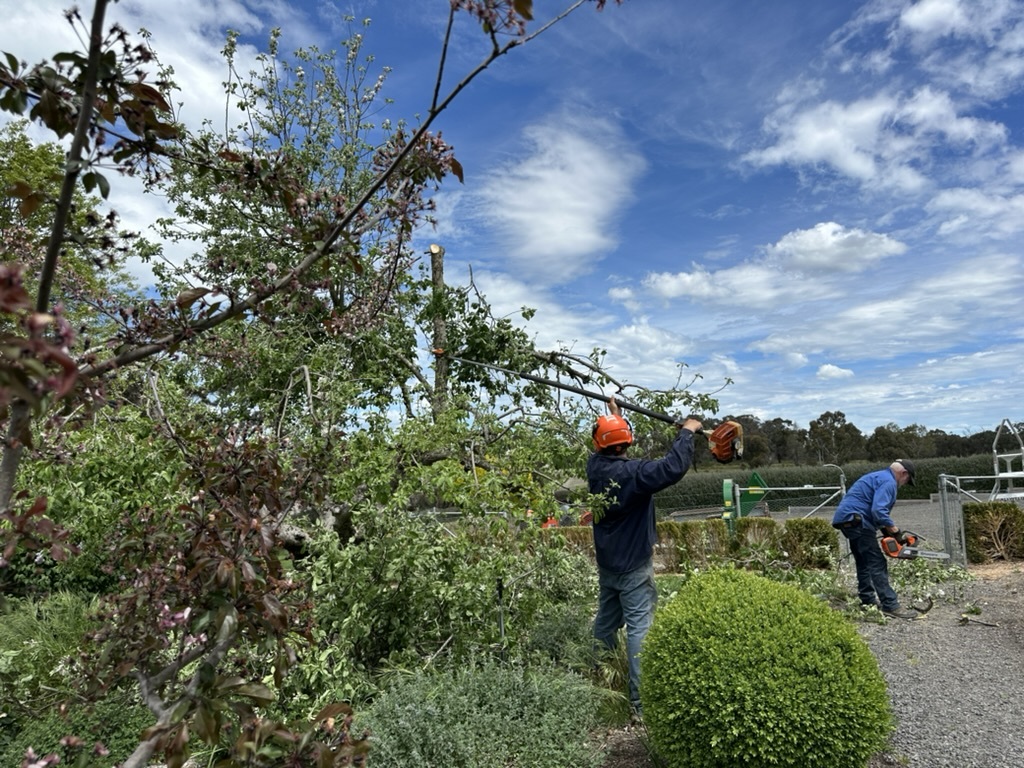
Recently, Rob, Rune and Michael tackled the large apple tree in our back garden, removing another substantial stem as part of a staged effort to reduce its overall height. There's one more big branch to deal with next year.
This tree has an interesting history. When we moved to Glenview Park 25 years ago, it didn't produce apples. It wasn't until we began planting other apple varieties nearby that it suddenly started producing large quantities of fruit!
The additional varieties evidently provided the compatible pollen it needed.
Today, this old tree is an important demonstration tree for our orchard establishment and pruning workshops. It's a great example of the importance of pollination, as well as the challenges of managing large, mature fruit trees.
Finding new homes for excess trees
Over the years we've accumulated quite a collection of potted trees from various nursery and garden projects.
We've been sorting through them recently, planting some around the farm and deciding what to do with the remainder.
Rather than leave them sitting in pots indefinitely, we're offering workshop participants the opportunity to purchase some of these excess plants at very low prices, starting at $10.
There are some unusual fruiting and ornamental varieties, many are mature and pot-bound, and will need extra care. They're certainly not our usual nursery-quality stock!
This offer is exclusively for people attending our upcoming workshops, on the day of their attendance.
Out and about – gardens, weeds and rural communities
Kate enjoyed a rather wet visit to the beautiful Garden of St Erth at Blackwood recently for the launch of Natasha Morgan's book, The Productive Garden Companion.
Despite the rain, it was lovely to spend time in this established garden, particularly exploring its productive fruit and berry growing areas.
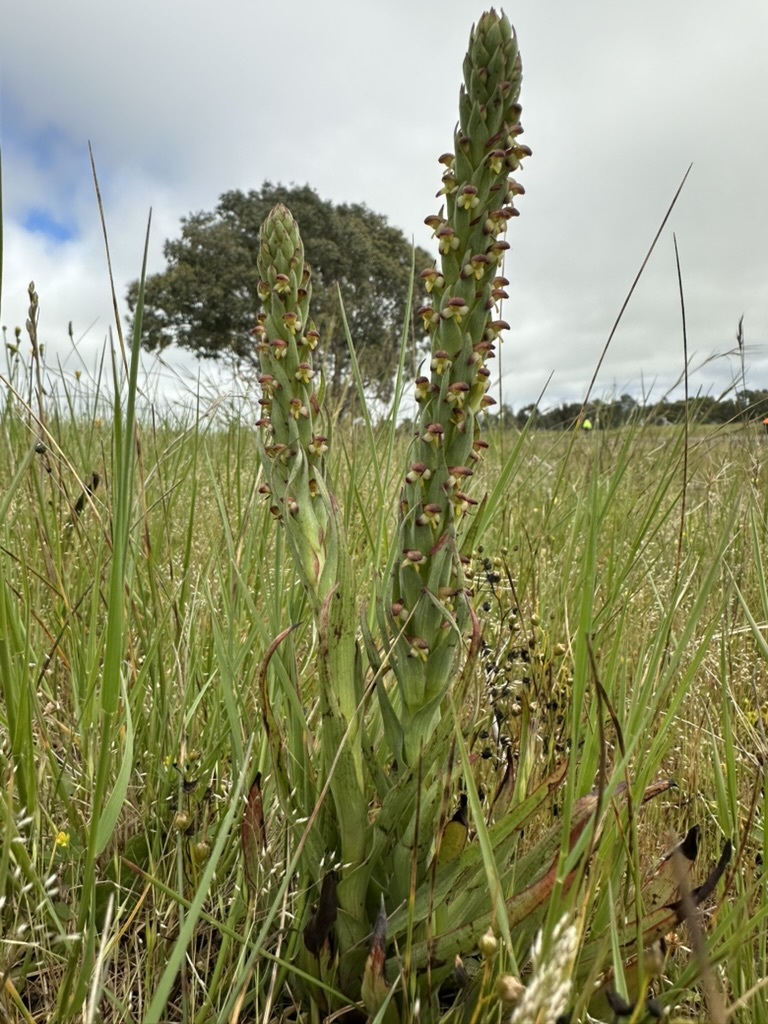
Closer to home, Kate has also been involved in local efforts to tackle South African Weed Orchid (Disa bracteata), an invasive orchid that threatens our native grasslands and woodland wildflowers. It's encouraging to see community members working together to protect our local bushland. You can follow more of Kate's weed activities on her social media accounts @weedyk8.
Rob also enjoyed a special opportunity to reconnect with Defying the Drift, a Rotary-supported youth development program that introduces secondary school students to career opportunities in agriculture and rural industries.
Rob started the program in 2010, developing the concept with fellow Rotarian Peter Oddie. Although he retired from Rotary and his involvement with Defying the Drift some years ago, he was delighted to be invited to celebrate the achievements of its latest participants.
It's wonderful to see a program that began 16 years ago continuing to encourage young people to consider careers and futures in regional Australia.
Coming up – the Beaufort Agricultural Show
One of our favourite local events, the Beaufort Agricultural Show, is coming up on Sunday 22 November.
It's a terrific family day out, with plenty to see and do, and a wonderful celebration of our local agricultural community.
Kate enjoys helping in the pavilion with the flowers and floral art sections, and we're looking forward to another great show.
If you're in the district, come along and support this wonderful local event.
Until next time, there's plenty more planting, mulching, watering and garden maintenance to keep us busy!
Thanks for joining us From Glenview Park. We hope to see you here again soon.
Images: Copyright Heritage Fruit Trees